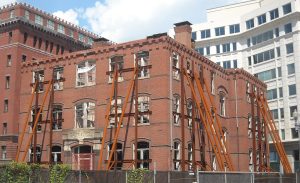
Petersburg sits roughly twenty-five miles south of Richmond, at the point where I-95 and I-85 meet and where the Appomattox River makes its last turn toward the James. It is one of Virginia’s independent cities, which means it is not a suburb of anything. It runs its own schools, sets its own tax rate, provides its own police, fire and utilities, and shares borders with Dinwiddie and Prince George counties on the south and west, with Colonial Heights and Chesterfield County across the river to the north, and with Hopewell to the east.
For renters, Petersburg offers older, larger housing at a lower price point than comparable architecture in the city of Richmond, plus a walkable historic downtown and highway access in three directions. For investors, the entry basis is lower and the renovation scope is deeper, and getting the rent expectation and the management right matters more than it does in a market with abundant comparable sales. Both audiences benefit from the same thing: knowing what to verify locally rather than assuming Petersburg works like the counties around Richmond.
Quick Answer
Petersburg is a historic independent city south of Richmond, part of the Tri-Cities with Colonial Heights and Hopewell, with its own school division, tax rate and services separate from the neighboring counties. Its rental stock is heavily older single-family homes, converted large houses and small multifamily buildings, much of it inside designated historic districts. Renters get more space and character for the money along with a car-dependent layout outside Old Towne, and investors get a lower basis in exchange for a deeper renovation scope and the need for local management and realistic rent underwriting. Verify tax rates, zoning, historic district rules, utilities and school information directly with the City of Petersburg before you commit.
An Independent City, Not a Suburb
Virginia’s independent city structure has practical consequences. A Petersburg address is not in any county. Your real estate and personal property tax bills, water and sewer service, trash collection, zoning approvals, building permits, code enforcement and school assignment all come from the city, not from Dinwiddie or Prince George, even though a neighbor a mile down the road may be in one of them.
That matters most in three situations. If you are comparing tax rates, get current figures from the city assessor and treasurer, since independent cities often carry different rates than the counties around them and rates change through the budget cycle. If you are buying to renovate, permitting and inspection run through the city, and in a locally designated historic district exterior work may require review before you replace windows, siding or a roof. And if schools matter, the assignment is to Petersburg City Public Schools, a division entirely separate from the Dinwiddie, Prince George and Chesterfield divisions, so a property near a county line is still a city-division address.
| What you are checking | Petersburg (independent city) | Neighboring counties |
|---|---|---|
| School division | Petersburg City Public Schools | Separate county divisions in Dinwiddie, Prince George and Chesterfield |
| Real estate taxes | Set by City Council; billed and assessed by the city | Set by each county board; different rates and cycles |
| Water and sewer | City utility service; tenant or owner account depends on the lease | County utility departments, or private well and septic in rural areas |
| Permits and inspections | City building and planning departments | County building departments |
| Historic district review | Applies in locally designated districts; confirm the boundary for the parcel | Varies; less common in surrounding rural areas |
| Police and fire | City departments | County sheriff or police, county or volunteer fire |
Old Towne and the Historic Districts
Petersburg’s architecture is the first thing most visitors notice. The city holds one of Virginia’s more significant concentrations of early nineteenth-century building stock, and its historic districts include Old Towne along the river, Poplar Lawn with its central green, Walnut Hill and the Folly Castle area, along with Pocahontas Island, a low-lying neighborhood with a long history as one of the country’s older free Black communities.
Walking those blocks you see Federal-era brick townhouses, Greek Revival and Italianate rowhouses, and later Queen Anne frame houses with deep porches. Old Towne itself is compact and walkable, with restored commercial buildings, restaurants and bars, coffee, a seasonal farmers market and Trapezium Brewing Company operating in a rehabbed industrial building. Blandford Church and its surrounding cemetery, known for its stained glass, sit just east of downtown.
Two practical notes for these districts. Historic designation can carry review requirements for exterior alterations, and standards vary by district and by whether the designation is local, state or federal, so ask city planning about the specific parcel before you plan a project. And the low ground near the Appomattox has a documented history of flooding, so anyone renting or buying near the river should check the flood map for the address and ask about flood insurance. The National Weather Service office in Wakefield serves this part of Virginia and is a good source for regional climate and flood information.
Getting Around, and the Real Story on the I-95 Commute
Petersburg’s location is its strongest practical asset. I-95 runs north to Richmond and south toward North Carolina. I-85 begins in Petersburg and heads southwest. US 460 runs east toward Suffolk and Norfolk and west toward Blackstone and Lynchburg. US 301 and Route 36 handle local traffic, with Route 36 the main connection east toward Hopewell and the Fort Gregg-Adams area.
The commute to Richmond is straightforward in distance and unpredictable in duration. Off-peak it is a short drive. During weekday peaks, the northbound stretch through Colonial Heights and Chester and the interchanges where I-95 meets I-295 are where the time goes, and the corridor carries heavy through-traffic and freight, so one incident can add substantial time with few alternate routes. Route 1 through Colonial Heights and Chesterfield is the usual local alternate, but it is signalized and slower by design.
Before you commit to a commute, drive it at the hour you would actually drive it, in both directions, and check current construction along the corridor, because work on this stretch has been ongoing. Amtrak service runs from the Petersburg station in Ettrick, just across the river, which makes Washington and points north reachable without driving, and long-range planning for the Richmond-to-Raleigh rail corridor runs through this area. The city operates local bus service; regional transit connections are limited, so plan on a car for most errands outside Old Towne.
Who Employs People Here
Petersburg’s economy is regional rather than self-contained, and several anchors sit just outside the city limits.
- Fort Gregg-Adams in Prince George County, formerly Fort Lee, is the largest single driver of housing demand in the area. Its mix of active-duty personnel, civilian employees, contractors and students in short-term assignments creates steady rental demand across the Tri-Cities. Owners near the post should understand that military tenancies bring their own rhythms, including permanent change of station timing and the federal lease termination protections that apply to servicemembers.
- Virginia State University, a historically Black university, sits in Ettrick across the Appomattox in Chesterfield County, close enough that Petersburg absorbs some faculty, staff and off-campus student demand.
- Richard Bland College of William & Mary, a two-year college, is just outside the city in Prince George County.
- Health care and public institutions. Southside Regional Medical Center is the area’s hospital and a significant employer, and Central State Hospital, a state psychiatric facility, has long been located here. The city and school division are also substantial employers.
- Logistics and manufacturing. The I-95 and I-85 junction has attracted distribution operations, and Petersburg has drawn public and private investment aimed at advanced pharmaceutical manufacturing. Timelines shift, so treat any specific project as something to verify rather than a completed fact.
- Hospitality and gaming. Petersburg voters approved a casino referendum and a resort development has been moving through approval and construction. Because schedules and scope change, confirm the current status with the City of Petersburg before building it into a decision.
The Appomattox River, Parks and Getting Outside
The Appomattox is the defining natural feature. The river forms the city’s northern boundary, and a regional effort has been building a multi-use trail along the lower Appomattox in segments across the Tri-Cities, connecting riverfront access points, parks and historic sites. Access for paddling, fishing and walking is real and improving, though stitched together rather than continuous, so check which segments are open.
Petersburg National Battlefield, administered by the National Park Service, covers ground east and south of the city where the long siege of 1864 and 1865 played out, including the Crater. Beyond its historic weight, the park functions as everyday green space with driving tours, trails and open ground. West of the city, Lake Chesdin is a reservoir on the Appomattox with boating and fishing access from the Chesterfield and Dinwiddie sides.
For daily errands, grocery, pharmacy and big-box shopping cluster along the main commercial corridors and just across the line in Colonial Heights, which has a concentrated retail strip along Route 1 and Southpark Mall. Old Towne handles restaurants, coffee and small-shop needs on foot; almost everything else is a short drive.
What the Rental Stock Actually Looks Like
Petersburg’s rental inventory skews old, and the variation is block by block rather than neighborhood by neighborhood. Expect to encounter:
- Detached single-family houses from the late nineteenth and early twentieth centuries, often larger in square footage than newer construction at similar rents
- Brick and frame rowhouses and townhouses in and near the historic districts
- Large older houses that were divided into two to four units decades ago
- Small multifamily buildings, typically under a dozen units, frequently owned by individual investors
- Postwar and mid-century ranch and Cape Cod housing in the outer neighborhoods
- A limited amount of newer purpose-built apartment product, including some adaptive reuse of downtown commercial buildings
The condition range is wide, and that is the most important thing for a renter to internalize. A well-renovated older house and a deferred-maintenance one can sit on the same street in the same price range. Judge the property, not the listing photos or the neighborhood’s reputation.
A Renter’s Checklist Before You Sign
- Ask what heats the house and what it costs. Original windows, minimal insulation and an aging furnace or electric baseboard can be expensive to heat, and the utility bill is what renters most often underestimate.
- Ask who holds the water and sewer account, and get it in writing.
- Confirm cooling. Central air is common but not universal in older housing, so ask about window units and their electrical load.
- Check the electrical panel and count outlets in the rooms you will use. Two-prong receptacles and extension-cord living are a warning sign.
- Test water pressure at more than one fixture and look under every sink.
- Look for moisture signs: musty basements, ceiling staining, peeling paint near windows, buckled flooring.
- Ask about flood risk if the property sits on low ground near the river, and consider renters insurance that addresses it.
- Ask about parking. On-street parking in the historic districts is tight and may be regulated.
- Read the lease against your rights. Virginia rentals are governed by the Virginia Residential Landlord and Tenant Act, which covers repairs, entry notice, deposits and disclosures.
- Ask who handles maintenance and how requests are submitted. A professional manager with a documented request system is a materially different living experience than texting an owner.
If you are weighing Petersburg against locations closer in, our current Richmond-area homes for rent give you a live comparison point rather than a general impression.
For Investors: Why the Basis Is Lower and What That Actually Buys
Acquisition prices in Petersburg generally sit below what comparable square footage and architecture command in the city of Richmond. That is the headline, and it draws out-of-market investors. The part that gets underestimated is what sits behind the lower number: some combination of deeper deferred maintenance, older systems never fully modernized, a thinner pool of recent comparable sales, and rents that are lower in absolute terms. None of that is disqualifying. All of it changes how you underwrite.
- Renovation scope decides the deal. In pre-war housing, the difference between a cosmetic refresh and a systems replacement is enormous and not visible from the curb. Scope the property before you price it, not after.
- Comparable sales and rents can be scarce. Fewer transactions in a micro-market means appraisals are harder to support and your rent assumption has less data behind it. Verify against actual local leasing activity rather than a national estimate tool.
- Financing on lower-priced properties has friction. Many lenders have minimum loan amounts, and renovation-heavy older properties may not fit a conventional product. Talk to a lender who works in this market before you write an offer.
- Insurance deserves an early call. Roof age, knob-and-tube wiring, older plumbing, heating type and flood exposure all affect availability and pricing. Get a quote during due diligence, not after closing.
- Tax and program questions belong with professionals. Federal and Virginia rehabilitation tax credit programs exist for qualifying certified historic income-producing properties, and rental depreciation has its own rules. What a program generally provides and what you specifically qualify for are different things, so confirm with the administering agency and your CPA.
Inspection Priorities in Pre-War Housing
| System | What to look for | Why it matters here |
|---|---|---|
| Electrical | Knob-and-tube wiring, fuse panels, undersized service, ungrounded circuits, prior partial rewires | Common in housing of this vintage; affects insurability and safety, and a full rewire in plaster walls is a major line item |
| Plumbing | Galvanized supply lines, cast iron drains, original fixtures, water pressure at upper floors, the buried sewer lateral | Corroded supply and scaled drains fail gradually and expensively; the private lateral is the owner’s responsibility |
| Walls and ceilings | Plaster and lath condition, keying failure, prior drywall overlays, cracking that tracks structural movement | Determines whether the plan is patching or gutting, which drives cost and timeline |
| Windows | Sash operation, broken cords, glazing, rot at sills, storm windows, historic district restrictions on replacement | Comfort, utility cost and habitability standards all run through the windows, and replacement may require review |
| Roof and envelope | Roof age and layers, flashing at chimneys and valleys, gutter and downspout discharge, soffit and fascia rot | The most common source of the interior damage you find later; water gets in at the details, not the field |
| Foundation and crawlspace | Brick foundation condition, mortar needing repointing, pier settlement, crawlspace moisture, sill and joist rot | Older masonry foundations and damp crawlspaces are the region’s most under-inspected structural risk |
| Chimneys and heating | Liner condition, abandoned flues, furnace age, ductwork added to a house never designed for it, any unvented heater | Safety issue first, cost issue second, and a common failure point for rental inspections |
| Hazardous materials | Lead-based paint in pre-1978 housing, asbestos in insulation, flooring and duct wrap | Triggers disclosure obligations and certified work practices that change your contractor and your budget |
| Pests | Termite evidence at sills and framing, prior treatment records, moisture-driven wood-destroying insects | Central Virginia is a high-pressure termite region and older frame construction is vulnerable |
| Flood exposure | Flood map designation, elevation relative to the river, prior water in the basement | Low ground near the Appomattox has flooded historically; affects insurance and habitability |
Rent Expectations, Management, and Why Local Matters More Here
Two mistakes account for most disappointing Petersburg investments, and neither is about the purchase price.
The first is importing a rent assumption. Investors who have looked at Richmond, or who underwrite from out of state, sometimes apply a rent expectation the local market does not support, then spend months chasing it while the property sits vacant. A months-long vacancy erases the yield advantage that made the lower basis attractive. Price to the actual submarket, and remember that the submarket here can shift meaningfully within a few blocks. Housing data and program information from the Virginia Department of Housing and Community Development is a useful starting point, and the City of Petersburg is the authority on local tax, zoning and code questions.
The second is remote, hands-off management of a property that needs the opposite. Older housing generates more maintenance events than newer housing, full stop. Add a market where turnover costs are meaningful relative to rent, and the value of fast vendor response, thorough move-in and move-out documentation, consistent screening, and correct handling of notices and deposits under Virginia law goes up considerably. Voucher demand is a real part of this market, administered locally by the city’s housing authority, and units serving voucher holders carry inspection standards that reward maintenance discipline.
Both problems are solved by accurate expectations at the start. If you own or are considering a property in the Tri-Cities and want a straight read on realistic rent and management scope, request a free rental analysis and we will tell you honestly whether it fits our service area and what we would expect the property to do.
Where to Verify Everything
Because Petersburg is an independent city, the authoritative sources are city offices rather than county ones. Before you sign a lease or write an offer, go to the source:
- Real estate and personal property tax rates and a parcel’s assessment: the city assessor and treasurer
- Zoning, permitted use, rental registration or inspection requirements, and historic district boundaries and review procedures: city planning, zoning and code enforcement
- Water, sewer and trash service and account setup: the city utility department
- School assignment and enrollment: Petersburg City Public Schools
- Flood zone designation and insurance requirements: the current federal flood map for the address, plus an insurance agent
- Corridor construction and travel times: state transportation project information for I-95, I-85 and US 460
Resist relying on aggregated third-party figures for taxes, school assignment or flood status. In independent cities those sources are wrong often enough to matter. For more on how we evaluate Central Virginia submarkets, see our Learning Center.
Frequently Asked Questions
Is Petersburg part of Richmond?
No. Petersburg is a separate independent city about twenty-five miles south of Richmond, with its own government, school division, tax rate and utilities. It is part of the broader Richmond metropolitan area and part of the Tri-Cities with Colonial Heights and Hopewell, but it is not a suburb or a jurisdiction within Richmond.
How long is the commute from Petersburg to Richmond?
A short drive off-peak on I-95, and considerably longer during weekday peaks when the stretch through Colonial Heights and Chester and the I-295 interchanges slow down. The corridor carries heavy through-traffic, so incidents cause significant delays with limited alternates. Drive it at your actual commute times before you commit.
What are Petersburg’s historic districts?
They include Old Towne along the river, Poplar Lawn, Walnut Hill and the Folly Castle area, along with Pocahontas Island. Designation can bring review requirements for exterior work, so confirm the boundary and the rules for a specific parcel with city planning.
Does Fort Gregg-Adams affect the Petersburg rental market?
Yes. The installation in adjacent Prince George County, formerly named Fort Lee, is a major regional employer and training center, and its personnel, civilian staff and contractors generate steady rental demand across the Tri-Cities. Owners should understand military move cycles and the federal lease termination protections that apply to servicemembers.
Is Petersburg a good market for investors?
It can be, for investors who scope renovations accurately, underwrite rent to the local submarket rather than to Richmond, budget for the maintenance profile of pre-war housing, and use local management. It works poorly for those who buy on price alone and manage from a distance. We do not publish rent or return figures, because the range within the city is wide enough that any single number would mislead you.
What should I inspect in an older Petersburg house?
Prioritize electrical, plumbing, roof and flashing, foundation and crawlspace, chimneys and heating, and hazardous materials in pre-1978 housing, plus termite history and flood exposure. Also get a sewer camera scope on the private lateral, which is typically the owner’s responsibility and is not part of a standard home inspection.
Where can I find current data on Petersburg?
Go to the City of Petersburg for tax rates, assessments, zoning, permits and utilities, and to Petersburg City Public Schools for school information. For statewide housing data and programs, use the Virginia Department of Housing and Community Development. Avoid third-party aggregators for tax, school or flood details in an independent city.
Is there public transportation in Petersburg?
The city operates local bus service, and Amtrak serves the area from the station in nearby Ettrick. Regional transit connections are limited, so most residents rely on a car for daily errands outside the walkable Old Towne area.
Talk to Us About the Tri-Cities
Petersburg rewards specificity. The same budget can put a renter in a beautifully restored historic house or a poorly maintained one, and the same purchase price can put an investor into a straightforward cosmetic project or a full systems rebuild. The difference is in the details, and the details are local: which district, which block, which decade the systems were last touched, and what the actual rent is rather than the hoped-for one. Our team works throughout Central Virginia and can give you an honest read on a specific property. Learn more about our property management services, or contact us to talk through a Petersburg or Tri-Cities property before you sign or close.